

Service Description
Important aspects about the polystyrene insulation and the house ventilation
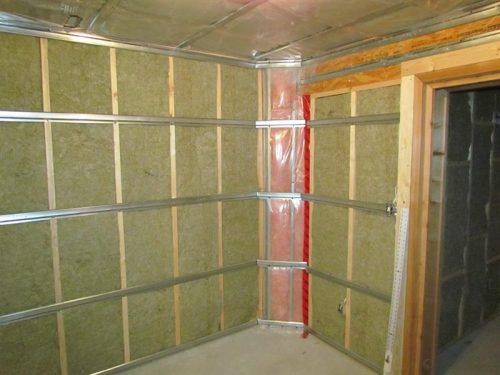
Thermal insulation is mandatory in the case of projects developed for new homes and it has become a priority in the case of old buildings as well in the last few years. For residential buildings, houses and blocks, the most common types of insulation are wall cladding through polystyrene (extruded or expanded) and the use of tight fitting joinery (with rubber seals) with double glazing.
At this stage, it is important for us to consider some important tricks involved in the principle underlying thermal insulation as an overall process. First, good insulation features a reduced heat transfer. Moreover, this type of transfer is achieved in the case of properties in three different ways:
- through heat conduction established through walls, roofs and windows – this is the reason why we isolate the walls and use PVC profiles with numerous rooms or aluminum profiles with thermal breaks;
- through radiant heat, especially through windows (between the glass sheets) and the use of Low-E windows that ensure small losses;
- through an effective exchange of air masses between the inside and the outside environment; if we want to stop the air flow, we must have a series of gaskets and seals on our doors and windows.
Let’s consider the example of a house with walls that have been insulated with 50 cm polystyrene and which features three rows of triple windows with perfect seals on doors and windows. How would you answer the following two essential questions? You can see our answers below.
Is it a well-insulated house?
Obviously yes! It can even be considered a passive house in which you canachieve a comfortable temperature without having the heating system. In fact, the heat produced inside by people, lamps and various other appliances is sufficient.
Is this a good solution for a house?
No! Although we will obtain a perfectly insulated house, it will also be a very tight one because there is no ventilation. In other words, it is vital to ensure a quality interior atmosphere that can be obtained through regular intake of fresh air.
Important conclusions that need to be drawn from this
A well-insulated and airtight house is prone to condensation indoors in case it does not feature sufficient ventilation. This is mainly because the humidity developed simply by living there (breath of people, cooking, washing) is trapped inside and due to lack of ventilation it increases up to values in the case of which it condenses on surfaces that are only a few degrees cooler than the indoor air temperature.
The phenomenon described at this stage can happen in any home that has been previously insulated with polystyrene but appears mostly in homes where a good seal is obtained through the construction technology. Unfortunately, the humidity is just the tip of the iceberg in this case. In reality, important factors like humidity, condensation, mold, are only the outward signs of closed, vitiated air.
If we have a well-insulated and airtight house and we do not use a fan, we breathe air that has been heavily polluted. Moreover, when we ventilate just by opening a window, we lose even more heat. Therefore, a thermally efficient as well as a properly ventilated home needs a proper ventilation system.
Possible solutions to consider
The easiest way in which we can achieve this is by opening the window! A more complicated but more efficient method might be using a central ventilation with a heat exchanger. It produces air exchange between the interior and the exterior but also establishes an exchange of heat between the two air flows.
Obviously, the heat transfer through the central ventilation will not be complete and there will be some loss of heat. However, heat losses will be much lower than in the case of ventilation obtained by simply opening the window.
House Refurbishment in London. New Build in London.
Flat Refurbishment in London. New Build in London.
House Extension and Refurbishment in London.
Loft Conversion and Refurbishment in London.
House Renovation and Refurbishment in London.
Office Refurbishment, Shop Refurbishment in London.
Bathroom and Kitchen Refurbishment in London.
Electricians and Plumbers in London. Refurbishment London.
Kitchen Furniture Fitting in London. Cleaning in London.




Reviews
There are no reviews yet.