
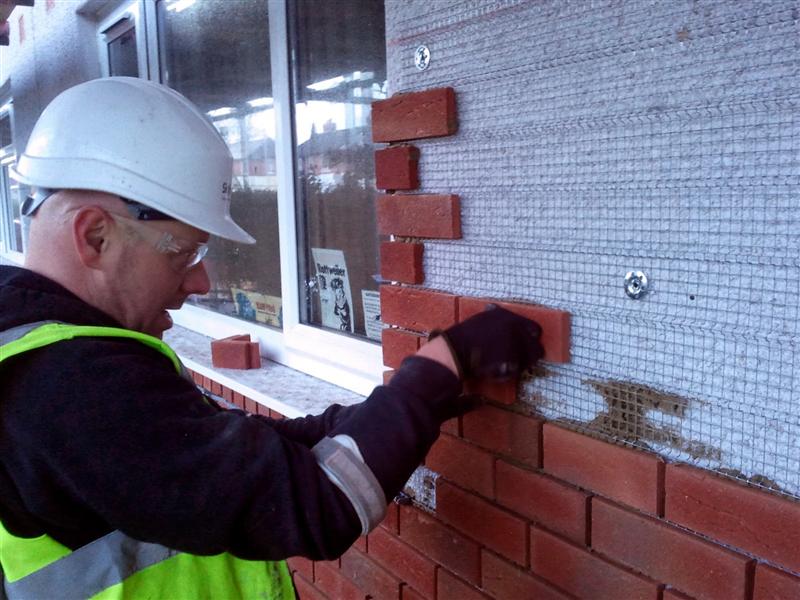
Service Description
What are the benefits of pressed bricks?
The pressed bricks are made mechanically in bricks factories. These bricks have regular shape and size, are stronger and less porous.
Factories are provided with installations for selecting the ground, its kneading, its casting in patterns, cutting, drying and firing the bricks.
Pressed bricks are made from the same materials as the hand bricks, clayey-sandy ground that is extracted from quarries.
The mining is done in autumn, leaving the ground to be shattered by rain, snow, frost and using it next year.
The clay is a light greenish-blue colour rock, adhesive and oily to the touch.
Kneading clay mixed with water can take any form. It is said that the clay is plastic and this feature is called plasticity.
When the clay dries, the water evaporates and the clay shrinks (is contracted) and the object made of it deforms and cracks. Depending on the level of plasticity that the clay can reach, it shrinks even more. This shortcoming is removed adding in clay a quantity of sand which reduces its plasticity.
Usually the clay is found in nature mixed with a suitable quantity of sand, giving it no other mixture.
The process of manufacturing of bricks is carried out according to the line of production displayed below.
The dug ground is transported by vans and toppled in mechanical mixers (mixers), where the required water is added.
The mixture passes through a funnel in rolling-mill. The rollers are metal cylinders that spin in different directions. They catch the mix and knead it well until it becomes a paste.
Then the paste passes in a pressing machine, which pushes through a funnel with the opening inthe shape and size of brick. From the funnel, it goes out as an endless prism with a brick size. This slips on a table equipped with a device (branch) that cuts it in bricks.
Bricks are loaded in wagons with shelves and they are transported under sheds. Here they are placed on the edge in stacks of three, on four rows and with spaces between bricks for drying. These are natural dryings.
Some factories are fitted with artificial dryings over ovens. In these ones, the bricks dry faster and better.
In case of natural drying, the drying time varies according to the air temperature, moisture, wind etc. In summer, the drying time is 3-5 weeks.
Fully dried bricks are transported by vans and they are placed in ovens for burning. Before being taken to burning, they should be tried to be perfectly dry.
In oven, the bricks are stacked in a way that the fire can include each brick. The temperature at which the bricks are burned is generally 850 Celsius degrees. After firing, the bricks are left a few days to cool and then they are taken out of the oven and stacked. From stacks, they are loaded and transported to building sites or to suppliers.
House Extension and Refurbishment in London.
Loft Conversion and Refurbishment in London.
House Renovation and Refurbishment in London.
Office Refurbishment, Shop Refurbishment in London.
Bathroom and Kitchen Refurbishment in London.
House Refurbishment in London. New Build in London.
Flat Refurbishment in London. New Build in London.
Electricians and Plumbers in London. Refurbishment London.
Kitchen Furniture Fitting in London. Cleaning in London.




Reviews
There are no reviews yet.