

Service Description
The insulation of the roof – a real headache
An efficient rehabilitation cannot be done if you do not take into account the building’s roof, especially if you live on the top floor of a block.
How to proceed with the terraces. To establish the thermal rehabilitation solutions you should take into account the degree of damage to the existing waterproofing and thermal insulation layers. There are situations when both the waterproofing layer and the insulation layer are inadequate. The thermal rehabilitation involves: removing all the existing layers to the upper surface of the slope concrete and restoring them under the conditions of replacing the existing thermal insulation with a new thermal insulating layer of quality and thickness corresponding to the new requirements. Another possibility is that the condition of the existing insulation will still be good and only the waterproofing insulation will be damaged.
Then remove the existing layers to the waterproofing insulation, keeping it in line with the steam barrier and maintain the existing thermal insulation layer. Install an additional thermal insulation layer of quality and thickness according to the new requirements and then install the new waterproofing layers. Another third case, simpler, is that the waterproofing insulation condition is good and all the existing layers are maintained, except the waterproofing insulation layer, ensuring a good mechanical and thermal protection, including the direct action of the sun, of the waterproofing insulation layers. The rehabilitation is done by removing the protective layer of the waterproofing insulation, repairing, if it is necessary, the existing waterproofing insulation and installing an additional thermal insulation layer. The complete restoration of the terrace is only done when the insulating layers and the slope concrete are inadequate.
It is more complicated when a framework has to be thermally rehabilitated, or the system that supports the roof and the roof itself. Firstly, a specialized technical expertise is required, depending on the purpose of the space under the roof (loft or attic) and the required thermal insulation level.
For the lofts that do not require air conditioning, the thermal rehabilitation is done by the thermo-insulation of the loft flooring, as follows: the surface is cleaned and the support surface is flattened, the steam barrier is applied, the thermal insulation is applied, a thick layer of separation is applied (polymeric foil or geotextile material) and only then the floor is assembled.
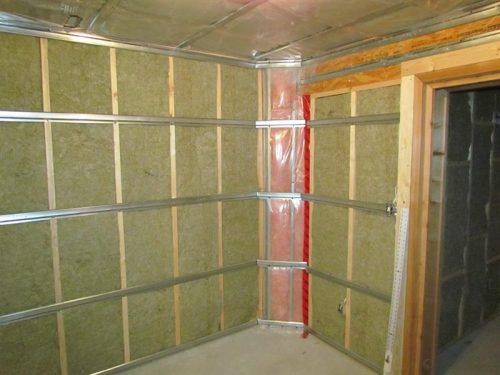
In the attics or lofts that require air conditioning, the interior closure of the spaces is made free, the thermal insulation is installed between the rafters, the interior barrier against steam is applied and the ceiling is finally assembled.
The transformation ofthe terraces into the framework, if you live at the block, is done with the consent of the owners’ association, on the basis of a specialized technical expertise that takes into account the strength and stability of the terrace and the state of the thermal insulation, the waterproofing insulation and the principles of the energy saving.
The solutions are based on: the height of the building, the built system of the building that supports the structure of the framework (sleepers, props, beams, rafters) which may require modifications. It is also taken into account the structure of the framework and the fixing way of the building so that it meets the requirements of resistance and stability under the action of environmental factors as well as the geometry of the roof which must be designed so as to ensure the outward or inner evacuation of the water coming from rains, taking into account the water drainage speed, the possibilities of discharge over picking, routing and collection elements.
Probably you will never isolate your roof without hiring a specialized team, but now you know what to expect and what to ask to the craftsmen, the roof insulation.
The insulation of the loft and roof
Whether you want it or not, the loft and the roof have to be insulated! If you have not done it yet, or if you want to know how well you have done it, read this article. Here you can find out which steps and materials are required for hydro and thermal insulation of the loft floor and of the roof of the house. Why? Because the steam, the atmospheric precipitation and the noise do not skip over any house. So it would be good to “protect” ourselves.
If a house has an unimproved loft as an attic, we can say that the roof is “cold” in the sense that natural ventilation is made through this space. The steams from the atmosphere come in and out through special openings provided for construction. The loft lighting windows are not used for aeration only sporadically due to the danger of the water entering and the “invading” of the birds.
As opposed word to comparison we have the “warm”, unventilated roof, often found in the non-roofed buildings made of tile or steel plate, for example in the usual blocks. The air circuit is also made if there is an attic, but it is less intense, taking place only among the slopes over which the cover is assembled.
Regardless of whether we plan the loft of the house as an attic or not, it is necessary to isolate against the water inside or outside, the heat loss and, last but not least, the outside noise. Through the roof area there is about 30% heat dissipation of the house’s thermal energy demand, which is not at all negligible. On the other hand, maintaining a humid atmosphere in the loft leads to the destruction of the wooden structure of the roof, which endangers the security of the building.
What about the sound pollution, what to say more … It is good to know that the heat-insulating materials, including small channels or air intakes, are useful in this regard. The airborne sound will be cushioned when going through the labyrinths of the panels, and so we will be “quieter”.
First, the floor
Suppose that we are in the loft, ready to get to work. We advise you that the external repair of the roof should be left to a specialist, as it requires experience and it has risks of injury. If you have a small budget, you can limit yourself to loft floor insulation, the easiest work to do. We mention that it is very important to keep the layers application order.
When we have a flat surface of concrete, plasterboard or wood, we start with the waterproofing insulation. This can be done by placing on the floor an aluminum foil, polyethylene, waxed paper or Bituminated cardboard with special adhesives.
We can also use a number of more complex membranes, consisting of successive layers of steam barrier materials.
The reason for installing the waterproofing insulation is that the moisture from the steam condensation from the loft or through the accidental penetration of the water not to reach the ceiling of the room below, causing dampness.
The thermoinsulation follows, for which we can use one of the following materials: mineral wool (made of glass or quartz), extruded or expanded polystyrene or polyurethane. If we use polystyrene, it is advisable that the system includes a subsequent plasterboard plating, for a fire protection or loft transformation in the circulating area. This plating is done in order to avoid a fire bursting from the chimney. We hope you do not smoke the bacon in the loft.
Some specialists consider this plating unnecessary from the fire perspective. Although the plasterboard can withstand three hours of open fire, the polystyrene will melt in a few minutes, so the measure seems exaggerated. We did our duty and we told you.
Also as a general rule, the “involved” layers will be stuck tightly so as not to create air voids in which the condensation may accumulate. If the floor of the loft is made up of open, uncovered beams, the thermal insulator must be placed between these elements. Above we can build a circulating floor from the materials we have at our disposal. In case that this floor is not very useful to us, we will apply the insulation over the beams as well.
Another useful material with similar insulating qualities is the bulk mineral wool, which can be simply poured between the beams. The method is used when we do not have enough space in the loft to be able to “carry on” with all the necessary tools. In the case of the apparent beams, the waterproofing insulation is difficult to achieve, so the best option is to arrange the ceiling of the room below.
… and then the roof
Once we have the bottom part, let’s take a closer look at the roof of the house, which has to do its job under any conditions, whether rain, wind or snow. We will apply, as we already have, the hydro and thermal insulation. These are to be built continuously across the entire roof surface, without losing sight of any area, no matter how insignificant it may seem. The necessary materials are about the same, only the methods of application are a little different.
First, the gravity gives us a deal of trouble. If things were simpler at the floor, here all the elements have to be sustained in order to achieve stability of the construction elements and a better tightness. The beautiful part is that any insulated system that is respected is “prepared” for these situations. We will therefore use the fixing techniques of each system. A further mention is needed: For insulating the roof we recommend using mineral wool because it has steam diffusion properties, superior to polystyrene.
Also, it is necessary to avoid the situation where the insulation layer approaches less than 3 cm of the cover, especially when it is made of metal. During the summer, when temperatures at this level are high, they may deteriorate in contact with the steel, ceramic tile or concrete. To the roof, the order of application of insulating materials is exactly the opposite of the flooring. Thus, firstly, we put the mineral wool or polystyrene layer just below the roof boarding, between the rafters. In the case of mineral wool, we will prefer a model that includes the installing accessories between the beams. There is no need for expansion joints, and we even recommend a forced fixation of the wool mats or polystyrene panels.
There is a second layer of the thermal insulation (optional) over the rafters, and above the aluminum foil or polyethylene as a steam barrier. The work will be all the more useful if later we want to arrange an attic. In this case, we will benefit from good protection from condensation in the covering area.
When we make a general roof repair we can apply another layer of waterproofing insulation under or over the roof. It protects the loft without being an attic, from dust infiltration, storm-swept snow or rainwater.
The waterproof films have a drawback: they do not allow the steam diffusion, which in some cases causes dampness. That is why we will use permeable membranes, but only at the recommendation of specialists who will tell us the best model according to where we have problems.
The materials facilitate the steam diffusion but do not allow water to enter the loft. Numerous profile firms sell these types of specialty films (some of them can support a water column with a height of more than one meter, but it leaves to pass 1.5 kg of water per day). We mention that the thickness and qualities of the materials are all the more important as the climatic conditions of the area are tougher.
Once the loft construction works are completed, up to the attic there is only one step. When you reach this step, do not panic because of the lack of advice. We are preparing an article about the attic!





Reviews
There are no reviews yet.