
Service Description
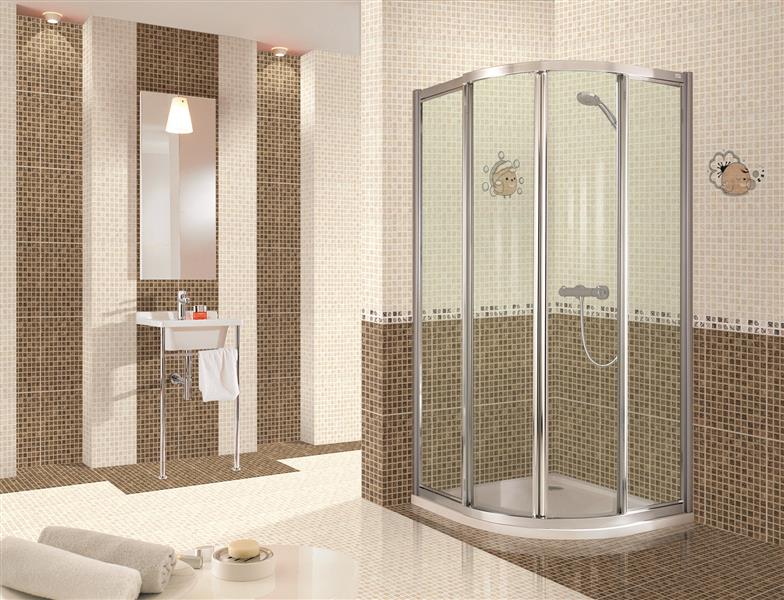
A shower cabin without infiltrations
Does the presence of the moisture in your house bother you? Do not you know what to do to eliminate the dampness and infiltration? Certainly there are areas inside the house that require a special approach from this point of view. The bathroom is an eloquent example and therefore it is recommended to use specific materials and methods. First, the products used must have high waterproofing qualities.
We have excluded from our calculations the situations encountered in the case of the installation of a shower cabin from the trade because we considered that not everyone can afford such a device – water jet for hydro massage, ozonize, digital control, remote control etc. Such a device is made of secured glass walls, has sealed doors, therefore it does not require waterproofing insulation. So we chose to popularize an isolation method for a classic cabin, either made of masonry or plasterboard.
The solution is sealing the cabin
If you are in the situation where you chose to build your own shower cabin we warn you that you have to meet and solve more problems. First of all, you should not ignore the other parts of the bathroom that may be affected, but also the elements beyond the wall. A great problem would be to place the cabin close to the exterior wall of the house. In this situation, a serious insulation is required because a cold wall automatically produces condensation. The lack of the waterproofing insulation in such a situation involves the risk of moisture penetration into the wall, a situation that can persist for days or even weeks; the biggest difficulties are encountered in the case of the north-facing walls.
Primers, adhesives, membranes, cement-based waterproofing products and, of course, ceramic tiles, all designed for the same purpose will be used: to protect both the wall and the comfort of the building’s beneficiaries. This protection system is not an own invention, but it is the result of long studies and experiments. Our recommendation is to choose, as much as possible, products of the same range, manufactured by a prestigious, certified company, even if the price is not very attractive.
Try yourself
You do not have the courage to waterproof insulate your own cabin? The hesitation is irrelevant. Certainly some of you already know how to install the faience tiles and flooring tiles. The waterproofing operation is nothing more difficult, involving the use of usual tools: the mason’s brush and trowel.
The waterproofing insulation is done only after the construction of the cabin walls and the tub has been completed. Such a cab is recommended for spaces of varying size, because it occupies very little space, less than a tub. In the case of large bathrooms, the waterproofing insulation will be limited to the cabin, and at the most in the nearby areas. If you have a smaller bathroom, we recommend you to isolate the entire room in order to obtain effective protection against moisture.
The first step involves priming the surface which follows to be processed. We used a depth-based primer, resistant to the aggressive atmospheric factors. Its role is to strengthen the support layer and to reduce the absorption. The application of the primer was done by me with a brush, after I cleaned the surface properly. The application of the waterproofing paste with the trowel is followed; the material is composed of cement, minerals and synthetic resins. The product is bi-component, mixing the compounds mechanically until the necessary consistency is achieved. Because the corners are easily cracked, we applied a waterproof, elastic and tear-resistant sealing tape. And this tape will be covered with the waterproof paste.
After the waterproofing insulation operation is finished, the walls and the tub will be plated with faience tiles and flooring tiles. The waterproofing system is complete only after grouting the surfaces with an Aquastat putty. If you have not skipped any of the above mentioned steps it means that the work has succeeded. Do not rush to take a shower to check for insulation; wait until the surface is dry enough.
The sealing tapes for waterproofing insulations – Uses and benefits
The modern waterproofing insulation systems of various indoor areas (bathroom floors, masonry shower tubs etc.) or exterior (terraces and balconies) require the use of waterproofing materials called flexible mineral waterproofing insulations. These are special products based on cement and other special compounds, which make it possible to make waterproofing insulation layers with a low application thickness, usable under various ceramic or natural plating.
As we have seen in other articles related to waterproofing insulation, the application is quite easy and it can be done by brushing or using polishing plaster iron coat. It can be applied both on vertical and horizontal surfaces, but requires little attention to make connections to the adjacent surfaces, edges or breakdowns. In order to achieve a safe and continuous layer, the mineral waterproofing insulation putties require the use of complementary products – sealing strips.
A sealing tape is made up of two types of material:
A medial area made of flexible rubber to be easy to cast on the connection area and to ensure sealing between the adjacent waterproofing insulation layers;
An area made of polyester fabric that borders on both sides of the middle layer. This will ensure the fixing and adhesion to the waterproofing layers.
From the point of view of the shape and area of use, there are several types of strips:
Linear sealing strips, rolled with different lengths. These are used to cover the inner or outer edges in a longitudinal direction;
Two-sided or three-sided sealing strips preformed for inner corners;
Two-sided or three-sided sealing strips preformed for outer corners;
Sealing straps for wall breakdowns by various installations. They are of square shape and the inner area made of rubber, can be adjusted to the diameter of the pipe.
From the point of view of installation, the sealing strips are applied in the first layer of waterproofing insulation mass, requiring the complete embedding. Their use ensures the continuity of the waterproofing insulation on the connection area and prevents cracks in these critical areas.
The advantages of the product:
- It ensures a complete sealing against the water action in the critical areas;
- They have a high elasticity;
- It shows an increased resistance to breakage and damage;
- It is easy to fit in the waterproofing insulation material.




Reviews
There are no reviews yet.