
Service Description
KNOCK, KNOCK! What door do you choose, wood or metal?
Choosing a door, internal or external, is not an easy “mission”. We say this because this decision involves many important choices that should be taken, which must take into account several aspects. After you have decided on the destination of the door, which, in our case, will be for the outside, you need to decide on the right material, purpose and its width. Continuing in the order given by the importance, when you choose the design you must take into account the style of your house and, to a lesser extent, the appearance and size of the hallway.
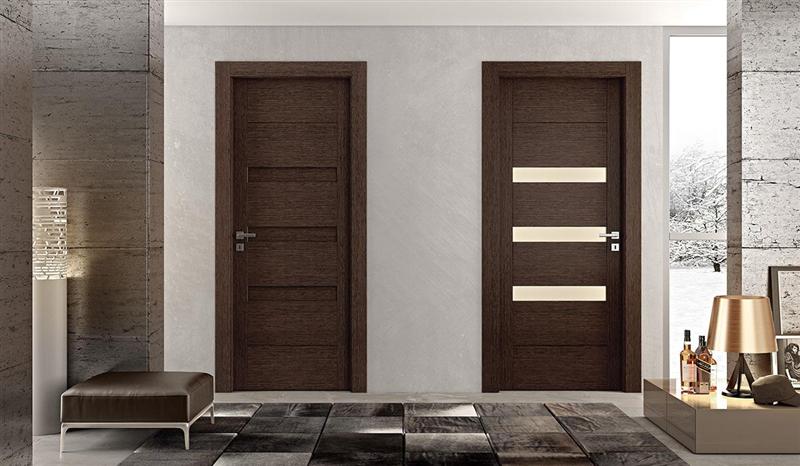
Price on the aspect – What makes a wooden door look good? Probably we all heard clichés like ” the warmth of the wood”. Although it is true that it is warm to the touch and its texture creates subtle variations of colors. Once you get used to this feature, you can easily make the difference between a wooden door and a metal one.
However, if it happens to not pay attention, the last ones manage to fool us when they are imitating a kind of wood. Therefore, we have to appeal to other senses besides sight. Touching or hearing the resonance of the material can provide us some extra valuable information. But what about the weight of the wood?
You may not realize that this type of doors is sometimes heavier than the metal one. Here we refer mainly to versions made of massive wood and less to those that have on their inside only wooden spacers “wrapped” with two plywood. In general, these two models lie at the basis of an impressive variety.
It is useful to know that the price increases as the design is more developed. As you study the doors becoming cheaper, you will see how the inlays and the special parts will begin to disappear, while the thickness of the plywood and of the door gets increasingly smaller. Another aspect that deserves attention is the hardware elements (locks and hinges) which are becoming simpler, being made of cheaper materials.
Fightwith the “moves” of the wood – Increasingly more people prefer the advantages of the wood against the “Iron”. The producers are also no less excited, because of the ease with which the wood can be processed or refinished in case of scratching. The problems arise only when we talk about the cost of production, because the manual processing requires skilled craftsmen. On the other hand, the wood cracks, dries, rots, swells and it does not thermal insulate as well as the polystyrene or the polyurethane foam.
Many doors were produced on an industrial scale and they have on the outside two sheets of veneer which cover the “core” made of wood conglomerates (chipboard, MDF or HDF). There are those who have the inside made of massive wood. But they cost more and are harder to find. Their correspondence, which is found in our country, is the un-veneered solid wood. The difference is a qualitative one, the veneered ones resist better to the moisture.
The problem of the used plywood is that they are too thin when they are applied under pressure and steam on the inside of the wood. In operation is enough to cause a small destruction tot he plywood for the moisture to be able penetrate. However, the problem is not so serious because it does not give up too easily. Those made entirely or only inside of solid wood are more resistant to cracks if they are made of boards placed with the fibers perpendicularly. Thus, if the wood “works” just one board will crack of the two ones.
The finishing and the maintenance of the “sentry” – The most manufacturers do not provide a longer warranty than one or two years, provided that the door is adequately maintained by the owner. Therefore, you must follow their instructions. If you decide to finish your door, in which case the purchase price will be approximately 10% lower, we recommend to install it firstly, to ensure that it has no problems in terms of the size, function and tightness. Then you should take it out and remove the hardware.
The next step is priming, which is designed to plug the pores of the wood. In the last phase several coats of varnish should be applied “for boats” as it is called. Each kind of wood reacts differently to the finishing process. For example, after varnishing, on the oak doors may appear dark spots, and this is why it is recommended to make small attempts in the beginning near to its edges. The wood of the fir, one of the most common soft woods, it stains as easy as the oak tree.
Fortunately, there is the pine that is resistant to stains, easy to finish and it maintains its appearance for longer. It is best to avoid the use of varnish or dark paints because they attract the light and result in the door heating leading to deformation and / or cracking the veneer.
We are continuing with the maintenance operations that entail the careful monitoring as to be able to find timely the cracks, changes in texture and color. All this requires taking relatively drastic measures, namely the restoration of coatings.
For exterior doors they are the most exposed to destructive factors, for which the installation of an eave for protection is a good solution. If this thing is not possible or too difficult to realize you should orient yourself towards an “iron” door.
“Iron” with thermal barrier – If the durability, thermal insulation, security, easy maintenance and low cost are important, the metal door is the best choice because it leaves behind its rival at all these categories. Unfortunately, the most people find it less showy. The manufacturers do their best to change this conception. The most successful of the models have faces covered with wooden plywood which, properly processed, end up to be no longer distinguished from the wood. Their problem is the texture of the fiber, which is very uniform and it seems to be without “naturalness”.
Those of you who do not like the wood, anywhere and anyhow, but neither are satisfied with a painted metal door, surely the “iron” doors plated with various shiny plastics will capture their attention. Because of the simplicity, but also of their beauty, they fit both for houses and for apartments of block.
The most of the doors like this have a frame of wood or metal and a pair of metal faces stuck on an interior of PU foam and expanded polystyrene. You can have the confirmation that the interior is made of polyurethane if the value of R (the resistance to heat transfer) is about 15 m K / W.
Over time, this foam loses its insulating properties and so it is good to consider from the onset that 15 as being 10.5. In the “self-destruct” process, the polyurethane foam is supposed to give off pollutants which are considered to lead to the destruction of the ozone layer.
Fortunately, all this does not happen if the interior is made of expanded polystyrene. If you live in a house, with the exterior door being directly exposed to freezing temperatures of winter, it is necessarily that the inside of the door to be filled, because the empty space that remains the condensation can turn into ice. At the edges, the door must be fitted with a thermal barrier of wood or vinyl, which eliminates the heat loss.
The periodical painting – Not all the metal doors are painted before being sold both to avoid the scratches during the installation and so that you can be able to choose the paint color. The manufacturers recommend that the painting process to be made within 45 days after the installation, in order to avoid the undesirable effects due to exposure to the bad weather. The frequency with which you will have to repair this type of door depends fullest of its exposure.
One which is sitting in the sun all day will require more frequent repairs than one that is protected by an eave. A recovery solution is to cover them with a light-colored paint. However, an iron door resists more than a wooden one, and if for some reason it suffers major damages, it can be repaired by a specialist. The resulting problems from deformation of the wooden one, such as scratches left on the hardwood floor and the stiffness in the door case are not met in the metal ones.
Burglary – At this point we can not say that the wood is better than the metal or vice versa, because nowadays the thieves do not break the door itself, but the lock. Therefore, the impenetrable one is the one with a very good lock and nothing else.
After a thorough search of the local profile market, I found that the best locks withstand up to 50 minutes at a professional locksmith tenacity. The weakest ones in this regard can give in even in a few seconds … But this should not discourage you. Even if you do not want your house to be a fortress, it must still be equipped with a door. We just have shown you how to select it, which is not a small thing.
House Extension and Refurbishment in London.
Loft Conversion and Refurbishment in London.
House Renovation and Refurbishment in London.
Office Refurbishment, Shop Refurbishment in London.
Bathroom and Kitchen Refurbishment in London.
House Refurbishment in London. New Build in London.
Flat Refurbishment in London. New Build in London.
Electricians and Plumbers in London. Refurbishment London.
Kitchen Furniture Fitting in London. Cleaning in London.




Reviews
There are no reviews yet.