
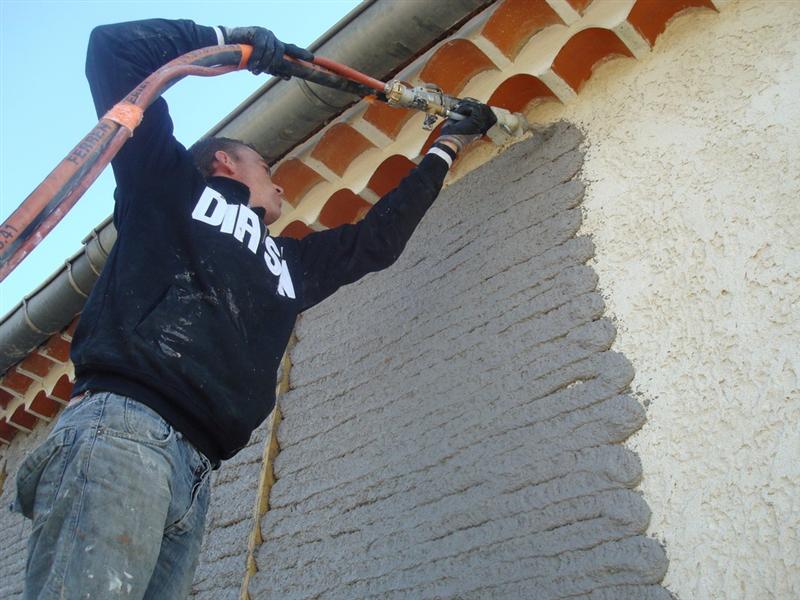
Service Description
What is the cement?
“The cement is a very fine powder to the touch, of light grey-blue colour. Mixed with water, the cement makes bonds (curdles) and become stronger. This phenomenon is due the chemical transformations that the cement endures in contact with the water. These changes occur in two phases:
- The bonding, which lasts several hours. In this phase, the cement paste loses its elasticity. During the bonding develops a large amount of heat;
- The strengthening with a much longer duration. In this phase, the compression strength of cement increases. The time required for strengthening depends on the type of the cement.
“In contrast with the lime and the plaster, the cement hardens both in air and in water, resisting also under water.
How the cement is manufactured?
The cement is manufactured by burning in the kiln the limestone mixed with the clay and other materials. In this mixture, the percentage of limestone is 76%. The burning of the cement is almost done only in rotary kilns, with length of 50-150m and diameter of 2-4 m. The burning temperature of the mixture is 1400°C, thus higher than that one for burning the bricks.
By burning and mixing are obtained red and strengthened balls. These balls form the cement clinker.
The clinker is crushed in mills, until you obtain a very fine powder, which is the cement. After cooling, the cement is packed in sacks and brought on site.
Classification of the cement
The Portland cement is obtained by burning a mixture at high temperatures in certain proportions of limy and clayey materials and crushing in fine powder of the obtained clinker.
Sometimes, in nature there are natural mixtures of clay and limestone (limy marl). In this case, the marlgoes straight into the manufacturing process of the cement.
The Portland cement is used in the execution of the construction in the air or water and especially for those that require a high strength and resistance to the influence of low temperatures or atmospheric agents.
The Portland cement is standardized on these three types:
- P 300 cement;
- P 400 cement;
- P 500 cement.
The numbers as 300, 400 and 500 represent the resistance of the cement to break by compression after 28 days from casting.
The sample cube made of cement P 300, under the influence of compression after 28 days after casting, is crushed when a force of 300 kg per square centimeter acts on it.
The Portland cement bonding starts after an hour and lasts for 10 hours. Then follows the strengthen of the cement during the resistance of cement always increases, so that after 28 days it surpasses the resistances of 300, 400 and 500. The finer crushed cement has agreater compressive strength.
The P 300 Cement is used for concrete or reinforced concrete works.
The Metallurgical cement is produced by grinding a mixture of clinker of normal Portland cement (70%) with granulated blast furnace slag (30%).
The qualities of this cement are similar to those of the Portland cement.
The metallurgical cement develops during the bonding a reduced amount of heat, therefore it can not be used when the ambient temperature decreases below +5 °C.
The metallurgical cement is manufactured in two types:
- 300 M cement, used in simple concrete works;
- 400 M cement used in reinforced concrete works.
The trassem cement is obtained by grinding a mixture of Portland cement clinker with trassem in certain proportions.
The trassem is a volcanic ash. Grounded and mixed with the cement, it has the feature to clog the pores of the cement mortar, preventing the water penetration and hardening with the cement. The trassem cement is used in concrete or reinforced concrete works executed in water or in wet environment.
Depending on the percentage of trass content, these cements are of two categories:
- 25 T cement, which contains trass in 25% and Portland cement clinker in 75%. This cement has the same resistance as P400 cement. It is used in the reinforced concrete works;
- 40 T cement, which contains trass in 40% and Portland cement clinker in 60%. This cement has the same resistance as P300 cement. It is used in the simple concrete works.
The metallurgical cement and the cement with trass are used whenever it is possibly saving the Portland cement.
The Quick hardening cement is a Portland cement that hardens very quickly. His bonding is normal. Therefore, the concretes made with this cement can be strike after two or three days.
The Quick hardening cement is used in reinforced concrete works, especially in multi-floors building, which require a rapid mould release and shuttering savings.
The quick hardening cement is a cement of whose outlet begins after a few minutes from casting and ends in maximum 30 minutes. It is used for works where the outlet has to be done quickly (drains, pour of the concrete during the cold season).
The road cement is used in the execution of the concrete roads. It is especially manufactured and has special qualities because it must have a high resistance to wearing, to expansions and contractions, to shocks (strikes).
The white cement is made of white clays and has a white colour. It is used for execution of the mosaic works, imitations of stone, faience, various tiles.
The supply and the storage of cement
Usually the cement is supplied in paper bags of 50kg. It can be supplied in bulk (paid), if the buyer and the manufacturer agree this way.
On the bags is printed the name, category of the cement, the factory, weight, and signs that indicate the quality of the cement.
The weight of the cement is calculated to 1250 kg /m³.
The cement storage is done in warehouses protected from moisture, provided by wood floors suspended of the ground. The bags are placed in high rows long of 2m at the most, because it would cluster, turning into balls. Sometimes the storehouse walls are dressed with tar paper to protect the cement from moisture. The bags are placed at a distance of about 50cm from the walls of the room in stacks of approximately 1 wagon. Between stacks there is left enough space for passage of a man
The quick hardening cements harden to the slightest moisture absorbed from the air. Therefore, when you store these cements, special precautions should be taken, protect it from moisture, especially in winter.
House Refurbishment in London. New Build in London.
Flat Refurbishment in London. New Build in London.
House Extension and Refurbishment in London.
Loft Conversion and Refurbishment in London.
House Renovation and Refurbishment in London.
Office Refurbishment, Shop Refurbishment in London.
Bathroom and Kitchen Refurbishment in London.
Electricians and Plumbers in London. Refurbishment London.
Kitchen Furniture Fitting in London. Cleaning in London.






Reviews
There are no reviews yet.