

Service Description
Phonic ceiling insulation
Sounds play a very important role in people’s lives, but sometimes we need a little bit of peace. Quietness is a gift that we deserve to offer to us, as we are affected daily by various noises or better said by noise pollution. But what is actually the noise? The noise is a complex sound, representing a mix of different frequencies.
Whether we want to get rid of neighbour’s annoying noises, whether it is an investment in our business, such as a club, restaurant or recording studio, the sound insulation of the ceiling is imminent in our priorities.
There are a variety of sound insulation materials on the market to satisfy the full range of needs that different customers may have.
The list of phonic ceiling insulation materials can be made of encased foam, HD Foam, acoustic adhesive membrane, acoustic flanges, soundproofing membrane, expanded polyethylene panels, mineral wool, gypsum board etc.
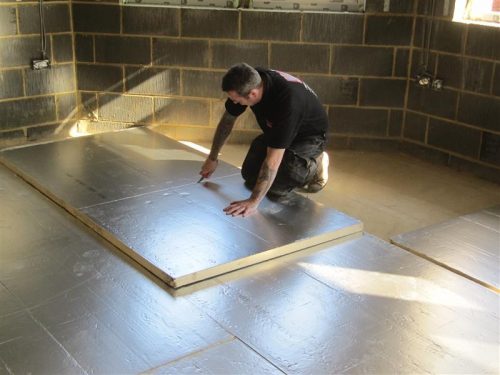
Today, we will exemplify a phonic insulation of the ceiling of an apartment with HD Foam Plus, which represents compressed polyurethane with textile inserts and a BlockTec membrane.
Step one – clean the ceiling;
Step Two – apply the acoustic adhesive to the ceiling and to the back of the material with a roller or a brush;
Step Three – leave it between 20 to 60 seconds before the material is placed. After being applied to the ceiling, you should strike the whole surface;
Step Four – Allow the material to dry for about 15 to 20 minutes. The time interval is related to the room temperature;
Step five – after applying the first plate, you should stick with the adhesive on the edges of the material. Then repeat steps two and three. Be careful when applying the plates to avoid any space between them;
Step Six – After you put the soundproofing material on the ceiling of the room, apply the dampers or the acoustic flanges that should be placed in zigzagged way to avoid the frequency coincidences.
Step seven – after putting the flanges, apply the profiles;
Step eight – after the profiles are applied, a high-density soundproofing membrane (synthetic auto-abrasive membrane) is placed to the inside on each profile;
Step nine – The same membrane is applied to the plasterboard and closed with the plasterboard.
We also present a variant of the thermal sound insulation of the ceiling, which this time involves plasterboard and mineral wool.
The first step – wash the ceiling. Here too, before you apply the insulation, you can give it an anti-mould treatment;
Step Two – Create a structure or a metallic skeleton for the ceiling by means of special supports or by means of some flanges;
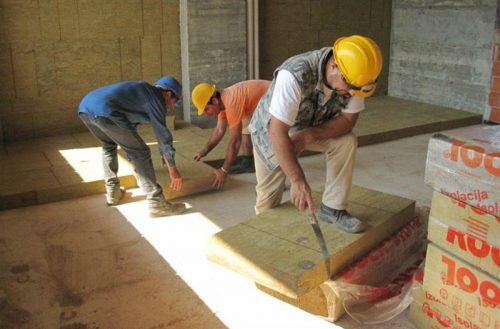
Step Three – Put the mineral wool behind the profiles;
Step Four – It is plated with plasterboard.
Today, we tried to outline the panel of phonic ceiling insulation. As you could see, there is no reason to prevent you from doing this. The phonic insulation of the ceiling is an important process for getting the oasis of peace that we need at home or enjoying a successful business.




Reviews
There are no reviews yet.